
Italy combines historic architecture, countryside landscapes, coastal scenery, renowned food, and centuries-old traditions, making it a popular setting for couples planning celebrations abroad. Interest in the country remains strong: Italy recorded more than 276 million overnight stays and 72.4 million arrivals between June and August 2026, with total overnight stays up 2% from the same period in 2025.
For couples considering a destination wedding in Italy, this popularity also means that planning matters, particularly for sought-after venues and peak dates. From Italy wedding venues in historic villas to seaside celebrations and intimate countryside ceremonies, Italy offers a wide range of possibilities. This guide explains where to get married, how much to budget, legal considerations, and how to organize a memorable wedding in Italy.
Why Choose a Wedding in Italy?
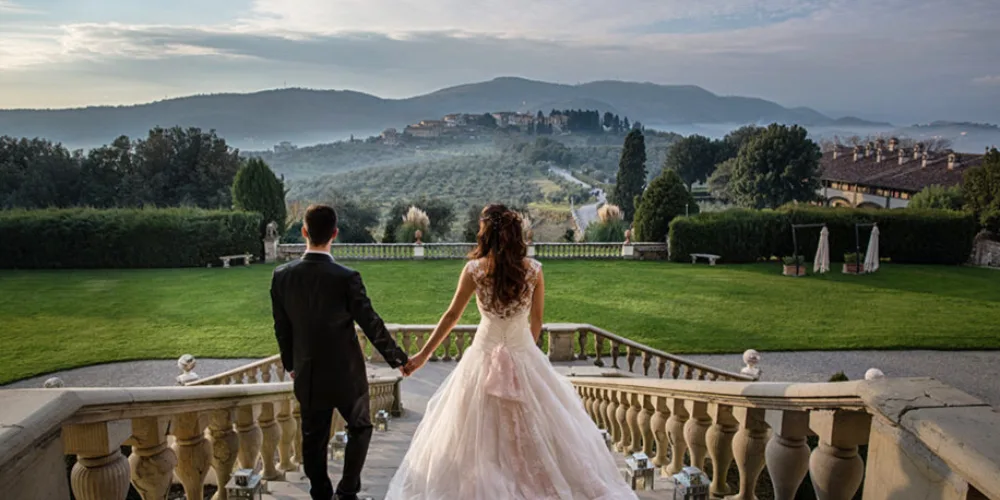
Italy offers several different experiences within one country. Couples can exchange vows among Tuscan vineyards, beside a lake, in a historic city, or overlooking the Mediterranean.
Some of the main reasons couples consider weddings in Italy include:
Historic villas, castles, palaces, and estates
Tuscan vineyards and countryside
Mediterranean beaches and coastal towns
Italian food, wine, and regional cuisine
Historic churches and architectural settings
Opportunities to turn the wedding into a multi-day holiday
A wide choice of regions and venue styles
The destination can also be adapted to different wedding sizes. An intimate ceremony may work well in a small countryside property, while a larger celebration can take place at a hotel, estate, or private villa.
Italy Wedding Venues: Where Can You Get Married?
Choosing the location is one of the first major decisions when planning an Italy wedding. Each region has a different landscape and atmosphere, so couples should consider the type of celebration they want before booking a venue.
Tuscany Wedding Venues
Tuscany is particularly associated with vineyards, rolling hills, historic towns, and countryside estates. Wedding celebrations in Tuscany often take place at villas, castles, vineyards, and converted farmhouses.
For couples who want to be married in Tuscany, popular areas include Florence, Siena, Chianti, and the Val d'Orcia.
Tuscan villa weddings can offer:
Private gardens and courtyards
Vineyard and countryside views
Accommodation for wedding guests
Outdoor dining areas
Historic architecture
Space for rehearsal dinners and post-wedding events
A wedding destination in Tuscany can also make it easier to combine the ceremony with sightseeing, wine tasting, and local food experiences.
Lake Como
Lake Como is known for its lakefront villas, gardens, and historic properties. It is frequently considered for couples looking for luxury Italian wedding venues and elegant celebrations.
Because demand and venue exclusivity can be high, couples should ask about minimum guest numbers, accommodation requirements, event duration, catering arrangements, and venue restrictions before signing a contract.
Amalfi Coast
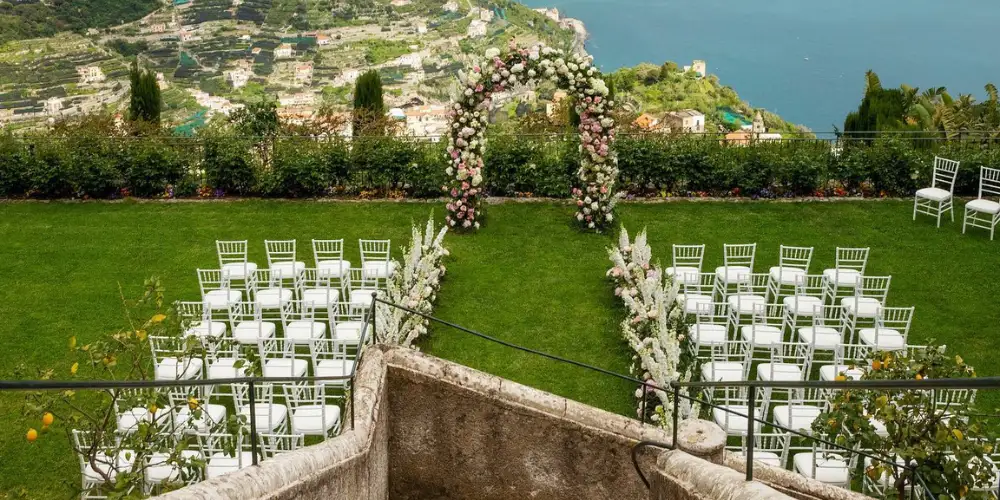
The Amalfi Coast provides a very different backdrop, with dramatic cliffs, colorful towns, sea views, and terraces overlooking the Mediterranean.
It can suit couples interested in a coastal wedding in Italy, particularly those who want photographs featuring the sea and surrounding landscape.
Rome
Rome combines wedding celebrations with historic architecture and city sightseeing. Couples can explore venues ranging from hotels and private residences to historic buildings and religious locations.
A Rome celebration can also be convenient for guests who want to extend their trip before or after the wedding.
Puglia
Puglia, in southern Italy, is known for its countryside, olive groves, masserie, and Mediterranean scenery. The region can be considered by couples looking beyond the country's most internationally recognized wedding locations.
Other Wedding Locations in Italy
Other wedding locations in Italy couples may consider include:
Sicily
Sardinia
Venice
Florence
Umbria
Lake Garda
Lake Maggiore
The Italian Riviera
Emilia-Romagna
The Dolomites
The right location depends on the season, guest travel requirements, budget, and preferred wedding style.
Best Wedding Venues in Italy: What Should You Look For?
There is no single type of venue that works for every couple. When comparing the best wedding venues in Italy for your needs, look beyond photographs and ask what is actually included.
Consider:
Venue rental price
Maximum guest capacity
Exclusive-use arrangements
Overnight accommodation
Catering options
Indoor backup space
Ceremony locations
Music and noise restrictions
Parking and transportation
Accessibility
Rain and weather arrangements
Required vendors
Local taxes and service charges
Setup and breakdown times
Some Italian wedding venues operate as full-service properties, while others simply provide the location and require you to arrange catering, furniture, lighting, entertainment, and other suppliers separately.
How Much Is a Wedding in Italy?
The average cost of destination wedding celebrations in Italy varies considerably because different sources use different guest counts and inclusions.
Recent 2026 wedding-industry estimates place many destination celebrations somewhere around €30,000–€50,000, while smaller weddings can cost less and luxury or multi-day celebrations can rise substantially beyond €80,000. One current Italian venue guide estimates €30,000–€50,000 for around 80–100 guests, while other 2026 planning sources report wider ranges depending on region and services.
Therefore, if you're asking how much a wedding in Italy costs, don't rely on one national average. Your actual budget can change significantly based on:
Number of guests
Region
Venue type
Wedding date
Catering
Accommodation
Photography and videography
Flowers and décor
Entertainment
Transportation
Wedding planning services
Number of wedding events
Example Wedding Budget
A typical budget can include the following categories:
Expense | What It Covers |
|---|---|
Venue | Rental, ceremony area, gardens, facilities |
Catering | Food, drinks, service staff |
Planner | Planning, coordination, vendor management |
Photography | Wedding photography and albums |
Videography | Ceremony and reception coverage |
Flowers | Bouquets, centerpieces, ceremony décor |
Entertainment | DJ, musicians, lighting, sound |
Transportation | Guest transfers and wedding cars |
Accommodation | Couple and potentially guests |
Stationery | Invitations, menus, place cards |
Legal costs | Documents and ceremony-related fees |
Recent 2026 planning guides report catering at roughly €100–€250 or more per guest depending on the menu and service level, while planner fees can range from several thousand euros upward.
These figures are planning estimates rather than fixed national prices. Always request a detailed quotation from your selected venue and vendors.
Italy Wedding Packages vs. Custom Weddings
Italy wedding packages can simplify planning because several services may be bundled together. Depending on the provider, a package may include a venue, food, drinks, basic décor, flowers, photography, music, or coordination.
Before choosing a package, check:
Exactly what is included
Number of guests covered
Additional guest charges
VAT and service fees
Accommodation
Upgrade costs
Vendor restrictions
Ceremony fees
Transportation
Cancellation terms
A customized celebration may provide more flexibility, but it can require more coordination. This is particularly important when planning from another country.
How to Plan a Wedding in Italy

Knowing how to plan a wedding in Italy can make the process much more manageable. Start with the major decisions and work toward the smaller details.
1. Set Your Wedding Budget
Determine your overall spending limit before contacting venues. Keep a separate contingency amount for unexpected expenses, particularly when your celebration involves travel and multiple vendors.
Some 2026 planning sources recommend allowing roughly 10–15% as a contingency for additional logistical costs, taxes, weather arrangements, and other unexpected expenses.
2. Choose the Region
Decide whether you want countryside, mountains, lakes, coastline, or a major city.
Your region will influence:
Venue prices
Guest transportation
Accommodation
Weather
Available vendors
Activities for guests
3. Select Your Guest List
Guest numbers directly affect catering, accommodation, transportation, venue size, and other expenses.
A smaller guest list can also make it easier to consider private villas and intimate properties.
4. Choose Your Wedding Date
Italy's wedding season can be busy, especially during popular summer months. Consider spring or early autumn if you want different availability and potentially different pricing.
Always confirm actual rates and availability directly with your chosen venue rather than assuming that a particular month will be cheaper.
5. Research Wedding Venues in Italy
Shortlist several wedding venues in Italy before making a decision.
Compare their:
Rental fees
Catering requirements
Accommodation
Capacity
Included services
Vendor policies
Weather backup plans
Accessibility
6. Hire Local Professionals
A wedding planner for a wedding in Italy can help coordinate local suppliers, timelines, transportation, venue requirements, and administrative details.
This can be particularly useful for couples who are planning remotely or do not speak Italian.
7. Plan Guest Travel
Give guests plenty of advance notice. Provide information about airports, transportation, accommodation, local attractions, and the distance between their hotel and the wedding venue.
8. Finalize the Details
Once the major arrangements are confirmed, work on:
Invitations
Wedding attire
Flowers
Décor
Music
Photography
Menu
Cake
Seating
Transportation
Guest activities
Getting Married in Italy: Legal Requirements

Legal requirements depend on the couple's nationality and the type of ceremony.
Italy's Ministry of Foreign Affairs states that foreign citizens seeking to marry in Italy generally need a certificate of no impediment to marry, issued by the authorities of their country of citizenship. Certain countries covered by the 1980 Munich Convention can instead use a certificate of legal capacity to marry.
Because documentation requirements can differ according to nationality and municipality, couples should contact the relevant Italian municipality and their own embassy or consulate well before the wedding.
If you are getting married in Italy and want the marriage legally recognized in another country, also confirm how the Italian marriage certificate must be translated, legalized, registered, or otherwise processed in your home country.
For couples dealing with Italian civil authorities, requirements can include documentation concerning identity, marital status, and the absence of legal impediments. Requirements should be confirmed with the specific municipality rather than relying on a general checklist.
Symbolic, Religious, or Civil Wedding?
Your ceremony type can affect the planning process.
Civil Ceremony
A civil ceremony is legally recognized when the applicable Italian requirements and procedures are completed.
Religious Ceremony
Religious ceremonies may involve additional requirements from the relevant religious institution. Couples should discuss documentation and eligibility directly with the church or religious authority.
Symbolic Ceremony
A symbolic ceremony generally focuses on the celebration itself rather than creating the legal marriage in Italy. Some couples complete the legal paperwork in their home country and hold a symbolic ceremony during their Italian celebration.
Luxury Wedding in Italy
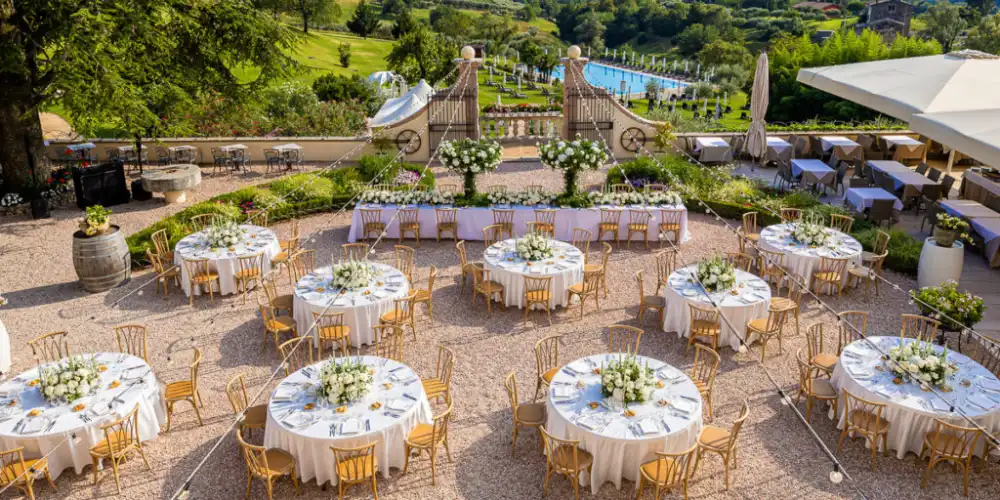
A luxury wedding in Italy can involve private villas, historic estates, premium hotels, personalized menus, elaborate floral installations, entertainment, and multi-day guest experiences.
Luxury planning may also involve additional events such as:
Welcome dinner
Boat excursion
Wine-tasting experience
Rehearsal dinner
Poolside gathering
Post-wedding brunch
When considering luxury Italian wedding venues, ask whether the quoted price covers exclusive use, accommodation, staffing, catering, taxes, and event infrastructure.
Weddings Abroad in Italy: How to Manage Guest Logistics
For weddings abroad, Italy can be an exciting experience for guests, but international travel adds planning responsibilities.
Create a guest information page covering:
Airport options
Hotel recommendations
Transfer arrangements
Wedding venue address
Local transportation
Weather expectations
Dress guidance
Currency information
Nearby attractions
Emergency contact information
If your guests are traveling from several countries, send key information well before the invitation deadline.
How to Save Money on an Italy Wedding
A beautiful celebration does not necessarily require every premium service. Couples can control costs by making deliberate decisions about guest numbers, location, timing, and inclusions.
Consider:
Reducing the guest list
Comparing multiple regions
Considering weekday dates
Looking at shoulder-season dates
Choosing a venue with accommodation
Comparing package and à-la-carte pricing
Using seasonal flowers
Selecting local food and wine
Combining ceremony and reception at one venue
Asking vendors for complete quotations
Remember that a lower venue price may not mean a lower final budget if catering, furniture, transportation, staffing, and décor must be added separately.
Conclusion
Planning a destination wedding in Italy is about more than choosing a beautiful venue. From selecting the right region and setting a realistic budget to understanding legal requirements and arranging accommodation and transportation, every detail plays a role in creating a smooth and memorable celebration.
Whether you dream of getting married in Tuscany among vineyards, celebrating beside a lake, exchanging vows along the coast, or hosting an elegant city wedding, Italy offers countless possibilities. Take time to compare wedding venues in Italy, understand what each package includes, and choose options that suit your wedding style and guest list.
With thoughtful planning, local support, and enough time to organize the details, your wedding in Italy can become a memorable celebration for both you and your guests.