
Portland International Airport reviews are, on balance, strongly positive. PDX ranked 6th among large U.S. airports in J.D. Power's 2025 North America Airport Satisfaction Study, and independent aviation reviewers cite a synthesized rating around 4.2 out of 5. Complaints that circulate online mostly trace back to a specific, time-boxed period: the airport's $2.15 billion terminal construction project, which produced longer walks and detours between 2020 and its full completion in June 2026.
Below is a data-backed breakdown of what reviewers actually say, what changed after construction wrapped, and the practical information on terminal layout, baggage claim, jobs, and nearby airport alternatives that travelers search for most.
What Do Passengers Actually Say in Portland International Airport Reviews?
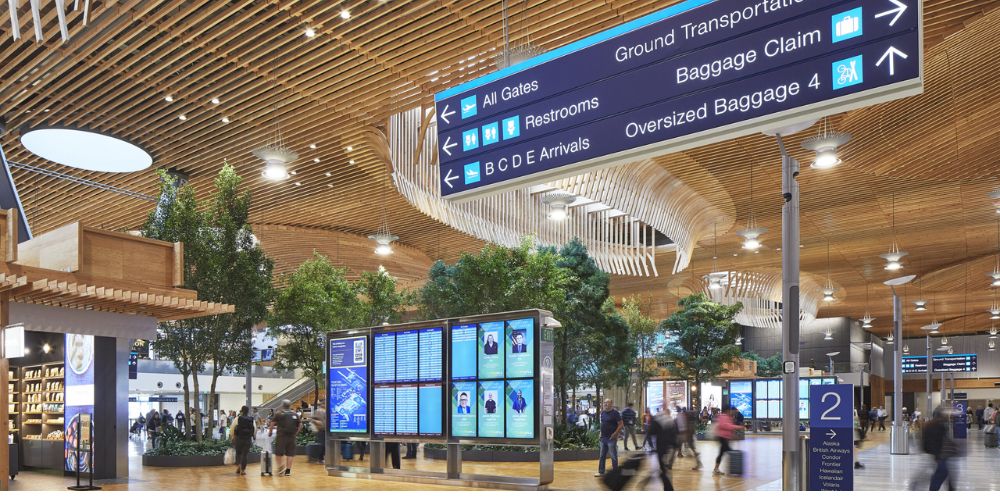
Most 2025–2026 reviews describe PDX as one of the more pleasant large U.S. airports, not a bad one. J.D. Power's 2025 study placed PDX 6th among "large" category airports (10–32.9 million annual passengers), behind John Wayne, Tampa, Dallas Love Field, Kansas City, and Raleigh-Durham, but ahead of most of its national peers. Aviation review site Airline Quality (Skytrax) shows a pattern of praise for the airport's natural light, local food and retail mix, and light rail access, with recurring gripes limited to a lack of visible clocks and the need to re-clear security when switching concourses. A separate synthesized review guide puts PDX at 4.2 out of 5, citing short walking distances, organized boarding, and strong ground transportation as core strengths, with limited late-night dining as the main weakness.
What Reviewers Praise Most
Natural light and open, airy terminal design
Local food and retail mix, not just national chains
Light rail (MAX) access straight into downtown Portland
Organized, low-stress boarding process
Short walking distances relative to airport size
What Reviewers Still Criticize
Limited late-night food options
Crowded seating during peak rush hours
Lack of visible clocks throughout the terminal
Re-clearing security when switching between some concourse pairs
Why Do Some Older Reviews Call PDX "Bad"?
Negative reviews of PDX largely date to its construction period, which ran from roughly 2020 through the project's completion on June 30, 2026. The Port of Portland's "PDX Next" overhaul was Oregon's largest public infrastructure project to date, funded primarily by airlines and federal grants, and it temporarily forced longer, perimeter-style walks especially toward Concourse B while sections of the terminal were rebuilt in phases. Reviews from that window frequently mention construction walls, extended distances to gates, and inconsistent signage.
That period is now over. Phase 1 (the mass-timber main terminal core) opened in August 2024, and the final phase, a 30% terminal expansion, finished construction on schedule in 2026, doubling the airport's visitor capacity and improving seismic resistance. Reviews posted since the reopening skew noticeably more positive, and outdated complaints about construction chaos no longer reflect the current facility.
Is PDX a Good Airport in 2026?
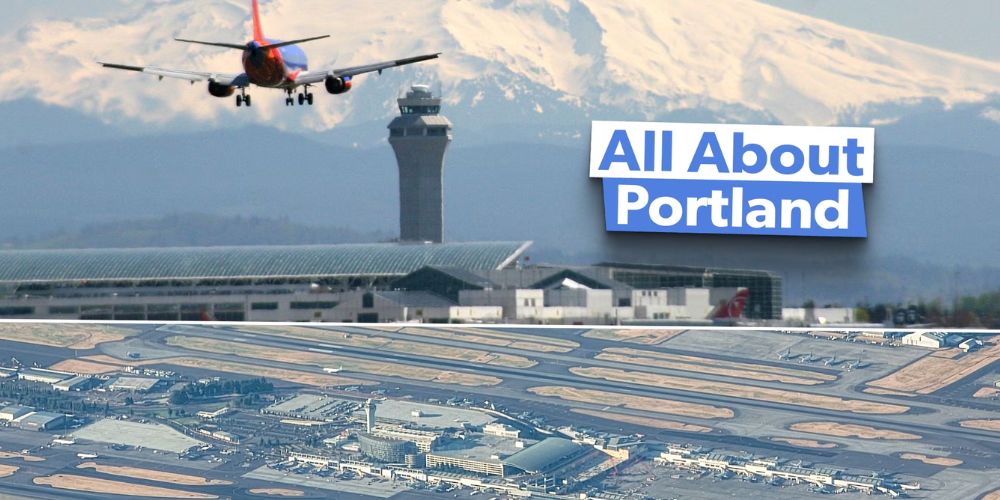
Yes, PDX in 2026 is a substantially upgraded airport following the completion of its 11-year, $2.15 billion renovation on June 30, 2026. The finished terminal includes local retailers like Powell's Books and Columbia Sportswear alongside newer Portland businesses such as Blue Star Donuts and Straightaway Cocktails, reinforcing the airport's "local-est airport" branding. On its first anniversary in August 2025, the new main terminal had already won industry recognition, including Best New Full-Service Restaurant and Best Representing a Sense of Place from national airport food and beverage awards.
Structurally, the airport now has permanent north and south exit lanes to baggage claim, a numbered pickup curb (Pick-up Location 1–10), and a dedicated rideshare zone replacing the inconsistent, description-based pickup process travelers dealt with during construction. For a facility handling over 18.5 million passengers in 2025 (up 6% year-over-year), these are meaningful, measurable improvements rather than cosmetic ones.
PDX Airport Ratings at a Glance
Source | Rating/Rank | Basis |
|---|---|---|
J.D. Power 2025 Airport Satisfaction Study | 6th of "large" airports | Consumer survey, 10–32.9M passenger category |
Synthesized aviation review guide | 4.2 / 5 | Atmosphere, cleanliness, food/retail, staff attitude |
Skytrax/Airline Quality passenger reviews | Consistently positive | Recurring praise for light, layout, transit access |
Travel + Leisure / Condé Nast Traveler (historical) | Named a top U.S. airport (2013–2014) | Editorial "best airports" list |
What Changed at PDX After the Renovation?
The most significant post-renovation change is the layout: PDX now runs on a single connected terminal with four concourses (B, C, D, E) linked by an airside concourse connector, so passengers can walk between all four gates areas without re-clearing security once past the checkpoint. Two security checkpoints serve the terminal the South checkpoint for Concourses B/C, and the North checkpoint for D/E, with North running 24/7 while South closes overnight. Ground transportation was consolidated: rideshare pickup now routes through the Short-Term Garage rather than a curbside dead-end, and MAX Red Line light rail departs from a station at the terminal's south end near baggage claim, with trains every 15 minutes and a $2.80 adult fare into downtown Portland (about 30 minutes away).
PDX Airport Terminal Map: How Is It Laid Out?
PDX's terminal map centers on a single main terminal building flanked by two parallel concourse structures, organized on three levels. Baggage claim occupies the lower level, ticketing sits on the upper level, and a mezzanine holds a USO lounge and conference center. From the main terminal, Concourses B and C branch off one security checkpoint (South) and D and E branch off the other (North). The airside concourse connector completed as part of the PDX Next renovation lets arriving passengers walk between all four concourses without exiting security, which was not possible during earlier construction phases. The Port of Portland's official interactive map (flypdx.com/Map) lets travelers search by gate, restaurant, security checkpoint, or baggage carousel and get walking directions between two points useful for tight connections.
Terminal Layout at a Glance
Concourse B/C: South security checkpoint, closes overnight
Concourse D/E: North security checkpoint, open 24/7
Baggage claim: Lower level, U.S. Customs near Carousel 9
Ticketing & retail: Upper level
USO lounge/conference center: Mezzanine level
Which Security Checkpoint Should I Use?
Use the checkpoint closest to your departure gate rather than defaulting to one entrance your boarding pass typically indicates which concourse pair you need. Since the concourse connector lets you walk airside between all four concourses after clearing security, picking the wrong checkpoint just means a longer walk once inside, not a second screening.
Where Is Baggage Claim at Portland Airport, and How Do I Get Picked Up?
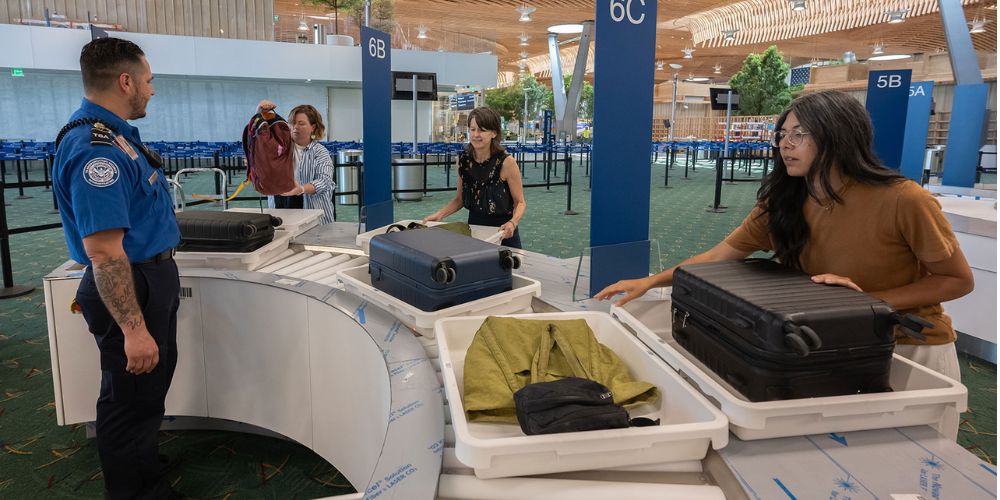
Baggage claim at Portland Airport is on Level 1 (the lower level) of the main terminal, directly below the ticketing hall, with U.S. Customs and Border Protection processing located near Carousel 9 for international arrivals. As of the airport's April 2026 phased terminal reopening, arriving passengers reach baggage claim via permanent north and south exit lanes, a shorter, better-signed path than the temporary construction-era routes. The pickup curb outside baggage claim is now numbered Pick-up Location 1 through 10 on the Port of Portland's official map, with a separate marked zone for limousine and town car pickups. Rideshare (Uber/Lyft) pickup is centralized through the Short-Term Garage (P1) rather than the curb directly outside baggage claim. Walking distance from baggage claim to the MAX Red Line station entrance runs roughly 200–800 feet depending on which carousel you start from.
Step-by-Step: From Deplaning to Pickup
Deplane and follow signage to Baggage Claim (Level 1)
Collect luggage from your assigned carousel (check flight info screens)
International arrivals: clear Customs near Carousel 9 first
For rideshare: follow signs to the Short-Term Garage (P1) pickup zone
For pre-arranged car service: proceed to your numbered curb location (1–10)
For MAX light rail: exit toward the south end of the terminal near baggage claim
What Is the Closest Airport to Vancouver, Washington?
Portland International Airport (PDX) is the closest airport to Vancouver, Washington, located about 4.6 miles from the city center and roughly 12 miles by road, a drive of around 20 minutes. Because Vancouver, WA sits directly across the Columbia River from Portland, Oregon, PDX functions as the de facto home airport for Vancouver residents despite technically being in a different state. For travelers wanting more flight options or lower fares, Seattle-Tacoma International Airport (SEA) is the next-nearest major alternative, but it's a significantly longer trip, about 151 miles and roughly 3 hours of driving. Eugene Airport (EUG), about 125–129 miles south, is a smaller regional alternative but rarely worth the drive given PDX's size. For nearly all practical purposes, international connections, rental cars, and flight frequency, PDX is the airport Vancouver, WA travelers should plan around.
Airports Near Vancouver, WA Distance Comparison
Airport | Code | Distance from Vancouver, WA | Approx. Drive Time |
|---|---|---|---|
Portland International | PDX | ~12 miles | ~20 minutes |
Eugene Airport | EUG | ~125–129 miles | ~2.5 hours |
Redmond/Roberts Field | RDM | ~154–156 miles | ~3 hours |
Seattle-Tacoma International | SEA | ~151–160 miles | ~3 hours |
What Is the Map of Oregon Airports, and Where Does PDX Rank?
Oregon has 97–98 public-use airports as of 2023–2026 data, but only eight are FAA-classified commercial service airports, and PDX is by far the largest. PDX alone handled 18,563,132 passengers in 2025, a 6% increase year-over-year, dwarfing every other airport in the state. The Oregon Department of Aviation owns and operates 28 of the state's airports, while the remainder are municipally or privately owned. Oregon has two airports with international designation: PDX and Rogue Valley International-Medford Airport (MFR), though PDX handles the overwhelming majority of international traffic. On a statewide airport map, PDX sits in the northwest corner near the Washington border, making it accessible to both the Portland metro and Vancouver, WA populations.
Oregon's Commercial Airports, Largest to Smallest
Portland International (PDX): Northwest Oregon; primary hub, 18.5M+ passengers/year
Eugene Airport (EUG): Western Oregon; fifth-largest in the Pacific Northwest
Rogue Valley International-Medford (MFR): Southern Oregon; Oregon's other international airport
Roberts Field (RDM): Central Oregon, serving Redmond/Bend
McNary Field (SLE): Salem; state capital regional service
Southwest Oregon Regional (OTH): North Bend/coastal service
Eastern Oregon Regional (PDT): Pendleton
Crater Lake-Klamath Regional (LMT): Klamath Falls
How Do I Find Portland Airport Jobs in 2026?
Portland Airport jobs are hired through two separate channels: the Port of Portland directly (for airport operations, security, and facilities roles) and dozens of individual employers operating inside the terminal (airlines, concessions, ground handling, and rental car companies). As of August 2026, the Port of Portland lists open roles such as Facility Maintenance & Deicing Operations Manager and Emergency Communications Call Taker, hired through a formal process that typically includes an application review, a Subject Matter Expert panel evaluation, and multiple interview rounds. Separately, job boards show 50–100+ concurrent PDX-area listings from third-party employers for ramp agents, baggage handlers, lounge staff, and lot drivers with average pay around $17.54/hour and a typical range of $14.42–$18.27/hour, though specialized roles (like the Alaska Airlines Lounge Food & Beverage Supervisor) pay up to $22/hour or more.
PDX Job Pay by Role
Job Type | Typical Employer | Pay Range (2026) |
|---|---|---|
Baggage handler/ramp agent | Ground handling contractors | ~$17–18/hour |
Airport security officer | Covenant Aviation Security | $17–23/hour |
Lounge food & beverage supervisor | Alaska Airlines | ~$22/hour |
Deicer agent (seasonal) | Port of Portland contractors | Varies, part-time |
Facility/operations management | Port of Portland (direct hire) | Salaried |
Lot driver / rental car staff | Enterprise, Avis, etc. | ~$18/hour |
To apply directly with the Port of Portland, use their official jobs portal; for concession and airline-contractor roles, Indeed, ZipRecruiter, and Glassdoor list current PDX-specific openings updated weekly.
Bottom Line: Should You Believe the Bad Reviews?
No, treat pre-2026 negative reviews of PDX as outdated. The airport's reputation problem was almost entirely a byproduct of a six-year, $2.15 billion construction project that is now finished, and current data (J.D. Power's 6th-place large-airport ranking, a 4.2/5 synthesized rating, and award-winning concessions) reflects a materially different, better airport than the one described in older complaints. If you're flying through PDX in 2026, expect a connected four-concourse layout, a numbered pickup curb, direct light rail access, and a strong local food scene, not the construction-era airport still described in some outdated reviews online.


