
Most people plan a trip to Charleston around a handful of postcard images: Rainbow Row, horse-drawn carriages, a plate of shrimp and grits. Then they land in the historic district on a July afternoon, wilt in the humidity, wait 40 minutes for a table on King Street, and wonder why nobody warned them.
This Charleston travel guide is built to fix that. Below, you'll find a season-by-season breakdown of when to go, a one-day itinerary and a full 2-day plan, the beaches worth the drive (and the ones that aren't), where to base yourself, and a realistic budget breakdown the kind with actual numbers, not vague price symbols. Whether you're squeezing in a day trip from Savannah or building a full Charleston, South Carolina weekend trip, everything here comes from what actually works on the ground, not a recycled "top 10" list.
When to Visit Charleston
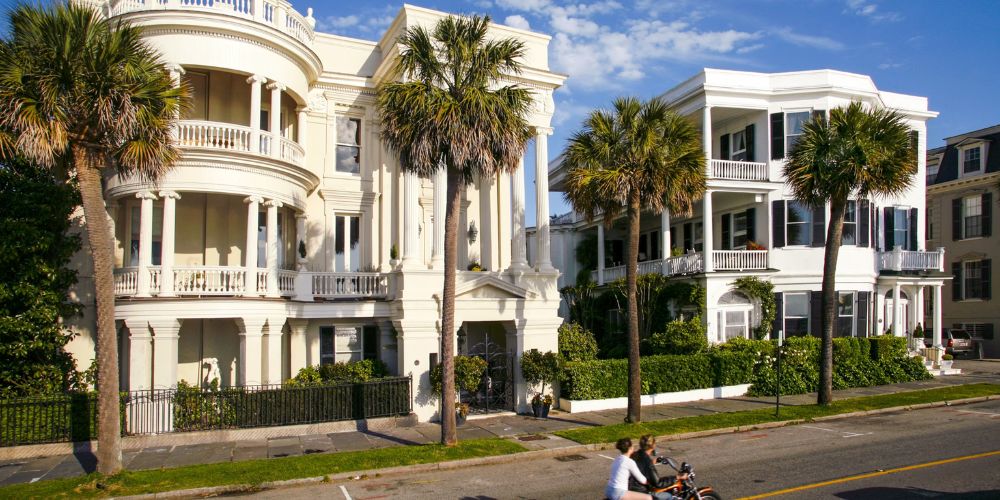
Charleston doesn't really have a bad season; it has trade-offs. The right time to visit depends on whether you're chasing beach weather, budget rates, or empty sidewalks in front of Rainbow Row.
Season | Weather | Crowds & Prices | Best For |
Spring (Mar–May) | 60s–70s°F, blooming gardens and wisteria | Peak season, highest hotel rates | First-time visitors, garden tours, Spoleto Festival |
Summer (Jun–Aug) | 85–95°F, high humidity, afternoon storms | Busy but slightly cheaper than spring | Beach days, boat tours, longer daylight hours |
Fall (Sep–Nov) | 70s°F, lower humidity | Second-busiest season, especially October | Walking tours, food festivals, comfortable sightseeing |
Winter (Dec–Feb) | 40s–60s°F, mild by U.S. standards | Lowest rates and thinnest crowds all year | Budget trips, holiday lights, quiet photography |
If someone asks the best time of year to go to Charleston with no other context, the honest answer is April or late October. Both months hit the sweet spot of comfortable temperatures, manageable humidity, and attractions running at full capacity without the March–May price surge.
The case for visiting Charleston in summer isn't just "it's warm." Longer daylight means more time on the water, evening plantation tours stay open later, and Folly Beach and Isle of Palms are at their liveliest. The trade-off is real heat and the occasional afternoon thunderstorm; plan outdoor time for morning or early evening and treat midday as museum-and-air-conditioning time.
A quick word on Charleston's holidays and festival calendar, since it changes what's open and what's booked:
Charleston Wine + Food Festival early March, books hotels up months ahead
Spoleto Festival USA late May to early June, the city's biggest arts event
Cooper River Bridge Run late March/early April, expect road closures downtown
MOJA Arts Festival late September/early October, celebrating African American and Caribbean culture
Charleston Fall Tours of Homes and Gardens October, private historic homes open to the public
If your trip lands during any of these, book lodging at least 8–10 weeks out.
Charleston in One Day vs. Charleston in 2 Days
How you spend your time in Charleston depends entirely on how much time you actually have. Here are both versions, tested for realistic pacing rather than an impossible checklist.
One Perfect Day in Charleston
If you're doing Charleston as a day trip, maybe you're based in Myrtle Beach, Columbia, or Savannah; this order keeps walking distances short and avoids backtracking.
8:30 AM Coffee and the Historic District. Start on Meeting Street and walk south. The morning light on the pastel houses is better for photos than midday glare, and the sidewalks are still empty.
9:30 AM Rainbow Row and the Battery. Walk the length of Rainbow Row, then continue to the Battery and White Point Garden for harbor views and Fort Sumter sightlines.
11:00 AM Charleston City Market. Browse the sweetgrass basket weavers (a genuine Gullah craft tradition, not a souvenir gimmick) and grab an early lunch nearby.
1:00 PM One paid attraction. Pick one: the Nathaniel Russell House, the Old Slave Mart Museum, or a one-hour harbor cruise. Don't try to fit two; this is where day-trippers run out of time.
3:00 PM King Street. Shopping, a bakery stop, and a slower pace before you head out.
5:00 PM Early dinner and departure. Lowcountry seafood before the evening rush hits downtown restaurants.
This one-day version covers the essentials without over-packing the schedule, which is the single biggest planning mistake first-time visitors make with a single day here.
The Ultimate 2-Day Charleston Itinerary
Two days lets you slow down and add one excursion outside downtown. Here's how it splits.
Day 1: Downtown & History
Morning: Historic district walking tour (book an early slot; 9 AM tours beat the heat and the crowds)
Midday: Charleston City Market and King Street lunch
Afternoon: Choose one historic home tour (Aiken-Rhett House gives a more unvarnished look at plantation-era life than the more polished mansion tours)
Evening: Sunset at Waterfront Park, then dinner in the French Quarter
Day 2: Water, Beaches, or Plantations
Choose your Day 2 based on what you skipped: a half-day at Middleton Place or Magnolia Plantation for gardens and history, OR a beach morning at Folly Beach or Sullivan's Island, followed by an afternoon boat tour to Fort Sumter.
Evening: Save your nicest dinner reservation for your last night; book it before you arrive, since the best Charleston restaurants fill up a week or more out.
This structure is also the backbone of a solid Charleston, South Carolina weekend trip; just add a Friday evening arrival and you've got a full three-day version without changing the core plan.
Must-See and Must-Do Charleston Experiences
Beyond the itinerary basics, these are the Charleston experiences that consistently deliver the genuine hot spots, not filler:
Walk the Battery at golden hour. Free, and it's the single best photo spot in the city.
Take a carriage tour but pick a company, not just a time slot. Companies rotate through a lottery system for routes, so the difference in tour quality comes down to the guide, not the route. Ask your hotel concierge which operator has the best-reviewed guides that week.
Visit at least one plantation with an honest history presentation. Magnolia Plantation and McLeod Plantation both include the enslaved history of the Lowcountry rather than glossing over it worth prioritizing over a purely garden-focused tour.
Eat where locals eat, not just where Instagram sends you. Rooftop bars are fun for a drink, but for food, ask your server where they eat on a day off.
Take a boat out on the harbor, even a short one. Charleston reads completely differently from the water than from its streets.
Browse (and buy from) a sweetgrass basket weaver directly, ideally on Meeting Street or at the Original Charleston City Market, rather than a gift shop reselling the same work at a markup.
Charleston's Best Beaches
Charleston sits on a peninsula, but its beaches are a short drive away on the barrier islands, and they are not interchangeable. Picking the right one matters more than most guides admit.
Beach | Distance from Downtown | Vibe | Best For |
Folly Beach | ~20 min | Surf-town energy, walkable Center Street | Younger travelers, surfers, casual beach day with food and bars nearby |
Isle of Palms | ~25 min | Wide sand, resort feel (Wild Dunes) | Families wanting amenities and space |
Sullivan's Island | ~25 min | Quiet, residential, no hotels | Couples, sunset walks, day-trippers who want calm water |
Kiawah Island | ~45 min | Upscale, mostly gated | Golf trips, luxury stays, special-occasion visits |
Seabrook Island | ~45 min | Quiet and secluded | Travelers wanting Kiawah's calm without the price tag |
If you only have time for one, the best Charleston beach for most first-time visitors is Folly Beach; it's close, it has a real beach-town feel with the Washout surf break and Center Street shops, and it doesn't require a resort stay to enjoy. If your priority is a quiet swim and photogenic scenery over amenities, Sullivan's Island wins, and it pairs naturally with a stop at the historic Fort Moultrie.
One planning note that trips up a lot of visitors: parking on Sullivan's Island is street parking only, no lots, and it fills fast on summer weekends. Arrive before 10 AM or plan for a longer walk from your car.
Where Should I Stay in Charleston?
Charleston's "neighborhoods" (locals sometimes just call them the different pockets of the city) each serve a different kind of trip.
French Quarter / Historic District best for first-timers. Walkable to nearly everything: Rainbow Row, the Market, most restaurants. Expect to pay a premium for the location.
Downtown near King Street / Marion Square best for shopping and nightlife. Slightly more affordable than the French Quarter with the same walkability.
Mount Pleasant is best for families. More space, easier parking, close to Shem Creek's waterfront restaurants, and a shorter drive to Isle of Palms and Sullivan's Island.
West Ashley is best for budget stays. A 10–15 minute drive to downtown with noticeably lower hotel rates.
A beach town (Folly Beach, Isle of Palms, Kiawah) is best if beach time is the actual priority. Just accept you'll drive into downtown rather than walk to it.
For a first Charleston trip, staying in the historic district and treating everything else as a day trip is still the simplest, lowest-regret choice.
Charleston and the Towns Around It
"Charleston" often gets used loosely to mean the whole metro area, but it's actually a cluster of distinct towns and cities around the historic peninsula, each worth knowing if you're planning more than a downtown-only trip:
Mount Pleasant
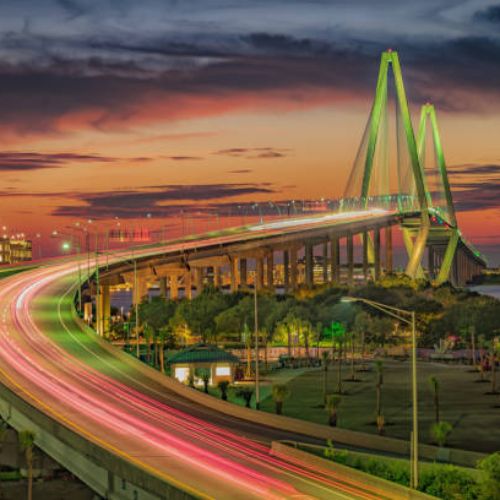
Mount Pleasant across the Ravenel Bridge, home to Shem Creek's waterfront restaurants and Patriots Point.
North Charleston
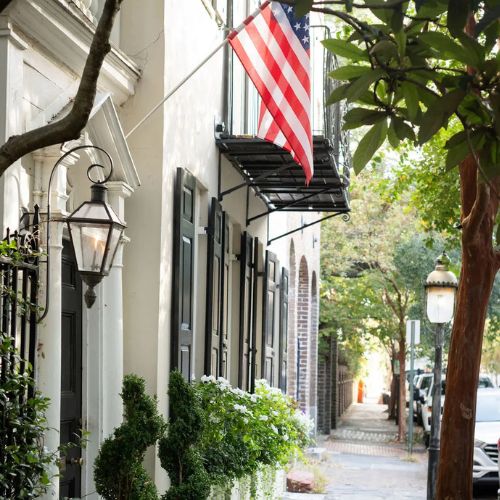
North Charleston is more industrial and budget-friendly, with the airport and larger hotel chains.
Summerville
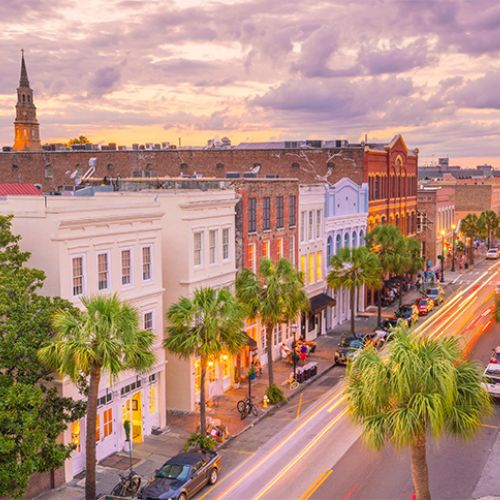
Summerville a quieter, historic small town about 25 minutes inland, known for its azaleas and antique shops.
James Island and Folly Beach

James Island and Folly Beach are bridge-connected to downtown, blending residential neighborhoods with beach access.
Johns Island
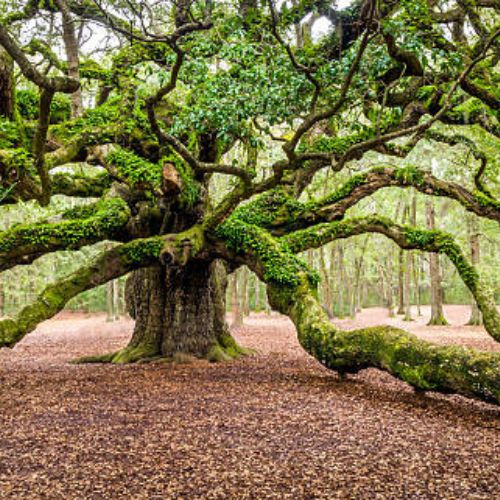
Johns Island is home to the Angel Oak Tree and a more rural, farm-to-table food scene.
If you have extra time, Beaufort (about 1.5 hours south) and Savannah, Georgia (roughly 2 hours south) both make popular add-on day trips, and plenty of visitors reverse the trip, treating Charleston itself as the day trip from Savannah.
Charleston on a Budget
Charleston has a reputation as an expensive destination, and prices in the French Quarter can back that up, but a genuinely good trip on a tighter budget is doable with the right choices.
Where the savings actually are:
Stay in West Ashley or North Charleston instead of downtown; hotel rates can run 30–40% lower just a short drive away.
Visit in January or February. This is Charleston's true off-season, with the lowest hotel rates of the year and almost no lines at major attractions.
Walk instead of Uber. The historic district is compact enough that most downtown sights are within a 20-minute walk of each other.
Free things to do add up fast: the Battery, Waterfront Park and the Pineapple Fountain, browsing (not buying at) the City Market, and self-guided walks through the French Quarter cost nothing.
Skip the guided carriage tour and do a free or self-guided walking tour instead, then spend that saved $30–40 on one really good meal.
Pack a picnic for the beach. Restaurant prices near Folly Beach and Isle of Palms run higher on summer weekends; a cooler from a downtown grocery stop saves real money.
Charleston's Scenery: What Makes It Different
Part of what makes Charleston photograph so well isn't just the architecture it's the combination of elements you don't get together anywhere else in the U.S. Spanish moss draped over live oaks, pastel single-house architecture with side porches called "piazzas," marsh grass turning gold at low tide, and a harbor line that puts Fort Sumter, the USS Yorktown, and the Arthur Ravenel Jr. Bridge all in view from the same waterfront park. If you're chasing photos, the Angel Oak Tree on Johns Island (a 400+ year old live oak) and the marsh boardwalks near Kiawah are worth the short drive outside the historic district.
Planning a Charleston Vacation for Couples
Charleston consistently ranks among the top U.S. destinations for couples' trips, and it earns that reputation honestly: the pace, the food scene, and the architecture all lean romantic without trying too hard.
Book a sunset harbor cruise. Several operators run 90-minute evening sails with the skyline lit up behind you.
Choose a boutique hotel in the French Quarter over a chain downtown. Properties like the smaller historic inns tend to have more character and better service for a special trip.
Reserve dinner at a restaurant with courtyard or rooftop seating. Charleston has more of these than most Southern cities, and outdoor seating in spring or fall is hard to beat.
Add one slower afternoon. A carriage tour or a plantation garden walk gives couples time to actually talk, rather than rushing between checklist stops.
Skip peak spring dates if you want a quieter, more private version of the trip; late fall offers nearly identical weather with fewer crowds and easier reservations.
Conclusion
Charleston is the kind of destination that rewards thoughtful planning. Whether you're exploring its historic streets, relaxing on nearby beaches, discovering its rich cultural heritage, or enjoying its renowned food scene, knowing when to visit, where to stay, and how to spend your time can make all the difference. With the practical tips, itineraries, and budget advice in this guide, you'll be well prepared to experience the best of Charleston without unnecessary stress. No matter the length of your trip, this charming Southern city offers memorable experiences that will keep you coming back for more.